Tag: Deck Cadets

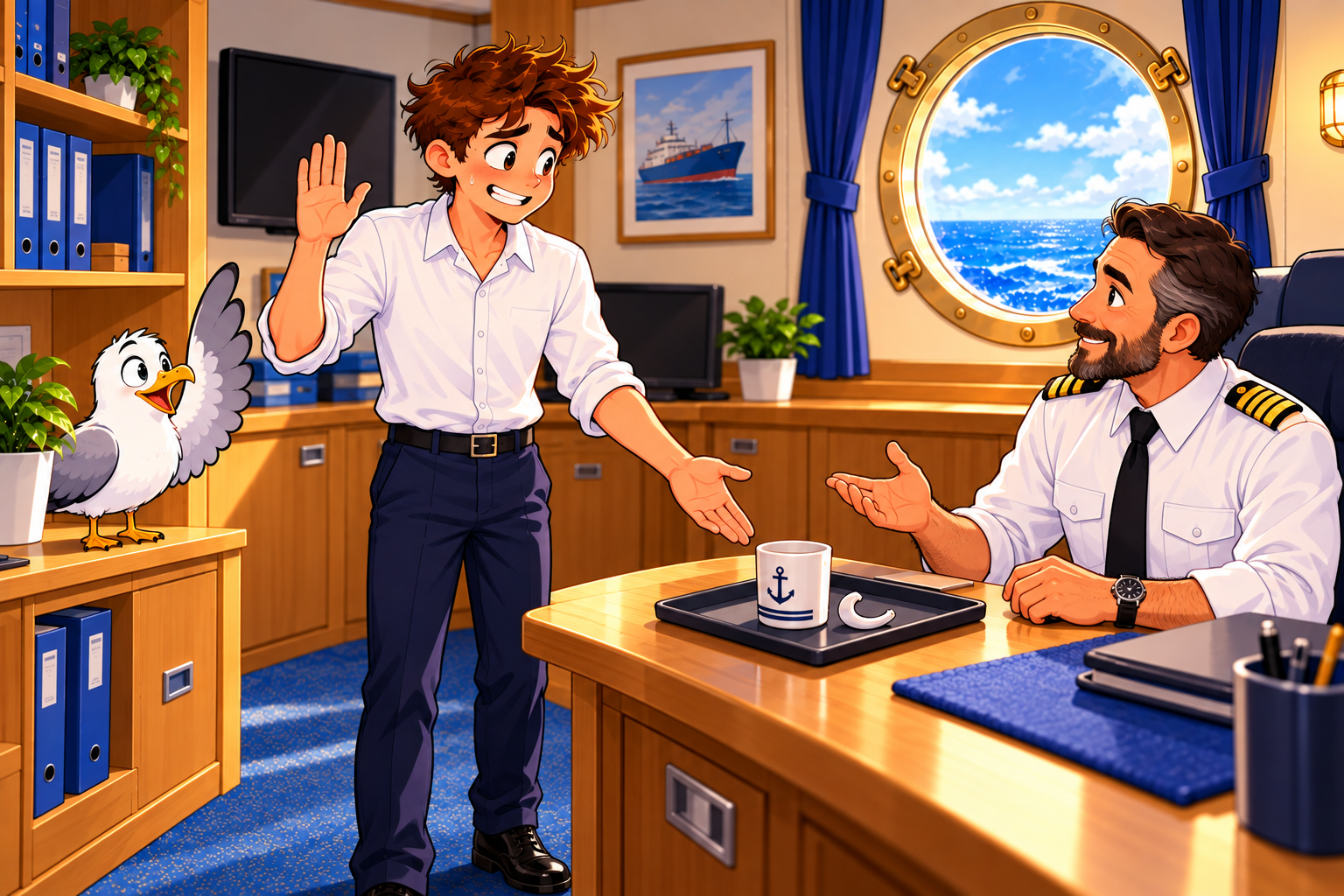
  • Made a Mistake Onboard? Don’t Make Hiding It Your Next One.

    Made a Mistake Onboard? Don’t Make Hiding It Your Next One.

    CADETS CORNER

    Made a mistake? Own it. Report it. Immediately.

    The team cannot respond to a problem it does not know exists. Your honesty gives us something valuable: time to act.

    There is a particular moment every cadet hopes to avoid. You look at what you have just done and think: “That was not right.”

    Your stomach drops. Your brain suddenly becomes a highly efficient excuse factory. Three explanations are ready before you have said a single useful word.

    Take a breath. What matters now is not how convincingly you can look innocent. It is owning your mistake and immediately telling the right person what happened.

    Putting your hand up means admitting it: “I made a mistake.” The important part is taking responsibility, not making a gesture. Do not hide your involvement behind “something went wrong” when you know what you did. Be honest about your action, and equally honest about anything you are still unsure of.

    This guide is for deck cadets, engine cadets and anyone learning how to report a mistake onboard a ship. It focuses on merchant ships, but the principle travels well: an early, honest report gives the team a better chance to respond.

    SPEAK UP. GIVE THE TEAM TIME.

    Made a mistake? Admit it immediately and tell the responsible officer what you did. Give the team the earliest possible chance to put it right and protect the ship.

    The principle is simple: own the mistake and report it now. Not only if someone notices. Not after trying three secret solutions. Admitting your part gives the team information it needs to respond.

    1. Modern systems are impressive. The people onboard still matter.

    On a modern LNG carrier, for example, sophisticated automation can monitor and control many processes. Connected systems can also give shore specialists valuable diagnostic information and support.

    But remote support is not the same thing as permission or capability to run every ship’s cargo operation from an office anywhere in the world. The arrangements depend on the particular vessel, approved systems and procedures.

    The point is not that technology makes the crew unnecessary. It is that technology does not remove the need for people who understand what is happening and can respond on the spot.

    You are there to operate safely, observe, communicate and act within your role — during normal operations and when something unexpected happens. A shore specialist may help interpret data. The team onboard must still assess the actual situation and take the appropriate local action.

    Your job is not simply to watch a screen look reassuring. It is to help the team understand reality.

    2. The sooner we know, the sooner we can respond

    A wrong entry, damaged equipment or an unintended action may have consequences beyond what you can see. Other people may be relying on that information or assuming equipment is in the expected condition.

    If you report promptly, the responsible team can assess the situation, protect people and decide what action is needed. If you stay silent, the next decision may be made on a false assumption.

    Early reporting does not guarantee that every consequence can be prevented. But a delay can take away options the team might otherwise have had.

    Protecting the ship means protecting people, the environment and safe operations. It does not mean hiding an incident to protect appearances. Honest reporting is part of protecting the ship — not an embarrassment to be avoided.

    3. Do not turn one mistake into a secret repair project

    The temptation is understandable: “I will just put it back before anyone sees.” But you may not understand the full effect of the original action, or what a second action could change.

    • Do not keep repeating an action you believe may be unsafe.
    • Do not experiment with controls, valves, settings or equipment to hide what happened.
    • Do not delete messages, conceal damage, backdate entries or overwrite records to remove the evidence.
    • Do not ask a friend to help you keep it quiet.

    Raise the concern immediately with the responsible officer. Take any immediate protective action required by your training and the vessel’s procedures, without putting yourself or others at risk. If there is immediate danger, use the ship’s emergency reporting and alarm arrangements; do not wait to prepare an explanation.

    This is not advice to freeze or wait passively in an emergency. It is advice against unauthorised improvisation and concealment.

    You do not need to become the secret maintenance department before dinner.

    4. “I made a mistake.” Then explain the facts.

    If you know you made the mistake, say so clearly and explain what you did. An apology alone does not tell the team what needs attention. Your first report does not need perfect grammar, a diagnosis or a polished incident report.

    Useful information includes:

    • What: what you did or observed.
    • Where: the exact location, document or equipment, as far as you know.
    • When: when it happened or when you noticed.
    • Now: what you can actually observe and any action already taken.
    • Uncertainty: what you do not know.

    A simple way to begin:

    “Officer, I made a mistake. I did [action] at [location] at approximately [time]. I have observed [facts]. I have already [action taken]. I am not sure about [uncertainty].”

    If urgent, lead with the danger and location. If you do not know something, say so. Do not fill a gap with a confident guess.

    Make sure the report is received and understood. A safety-critical message left unread on someone’s phone is not enough. If the first contact is unavailable, follow the vessel’s escalation procedure to the appropriate watchkeeper, senior officer or Master.

    5. Small examples. Important habits.

    You sent the wrong attachment. Inform the responsible person promptly: identify what was sent, to whom and when. Follow instructions for correction and any data-security reporting. Do not assume nobody will open it.

    You notice an incorrect figure in a record. Report it and use the approved correction process. Preserve the required audit trail. Making the number look right is not the same as correcting the record properly.

    You damaged a tool or piece of equipment. Report the damage before someone else relies on it. Follow the vessel’s arrangements to prevent unsafe use; do not quietly return it to the shelf.

    You think you operated the wrong control. Report immediately using the vessel’s procedures. Do not operate it again to “undo” the action unless directed or required by your training and emergency procedures.

    These examples are about reporting behaviour, not equipment-specific recovery instructions. The safe response depends on the actual situation.

    6. “Nothing happened” is not always the end of it

    Sometimes a mistake is caught before it causes harm. Sometimes a barrier works, or a colleague intervenes. That does not automatically make the event unimportant.

    The ship’s Safety Management System sets out how accidents, hazardous situations, non-conformities and near misses are reported and followed up. The purpose is to learn, identify contributing factors and reduce the chance of recurrence — not simply collect forms.

    An immediate verbal alert and a formal report do different jobs. First get urgent information to the people who need it. Then complete the required records and follow-up honestly. Do not delay an urgent alert while trying to produce a beautiful paragraph.

    7. Own your part. Understand the whole situation.

    Take responsibility for what you actually did. Do not blame a colleague to make your story easier. Equally, do not invent certainty or accept an inaccurate account just because you are the most junior person in the room.

    Unclear instructions, inadequate supervision, confusing labels, fatigue or an unfamiliar procedure may also need examination. Explain those facts honestly. Understanding contributing conditions is not the same as making excuses.

    Once the situation is under control, ask what should happen differently next time. If more training is needed, arrange it with your supervisor. Take the lesson into the next task, rather than carrying only the embarrassment.

    8. A word to the people receiving the report

    When a cadet says, “I made a mistake,” listen. Assess the risk, get the facts and organise the response. There will be time for review after the immediate situation has been dealt with.

    Humiliation is not a corrective action. If every early report produces an audience and a shouting match, the next person may hesitate when you most need them to speak.

    Fair accountability still matters. Encouraging honest reporting does not mean ignoring deliberate concealment, reckless conduct or repeated disregard of instructions. It means treating people fairly and examining what happened instead of deciding everything from the lowest rank involved.

    For the cadet who is worried about the reaction: you should not have to choose between safety and dignity. Still, do not withhold an urgent safety concern. Use the vessel’s reporting and escalation channels, and the company’s designated reporting or support arrangements if your concern is dismissed or you experience retaliation.

    The habit that builds trust

    You do not build professional trust by pretending you never make mistakes. You build it by being honest about what you know, reporting promptly and following through on what you learn.

    Before a task, ask again if the instruction is unclear. During a watch, stay attentive and understand your assigned role. If a mistake happens, tell the team while they still have the earliest possible chance to act.

    Keep your career paperwork organised too. Download Wave — The Seafarers’ Digital Wallet to organise your personal certificates and sea-service records, access documents offline and follow your career progress. Wave is your personal maritime wallet, not the vessel’s incident-reporting system. Operational concerns must go through the proper shipboard channels.

    Own the mistake.
    Report it immediately.
    Give the team time to act.

    The ship does not need you to look perfect. It needs you to be honest, alert and part of the team.

  • Your First Bridge Watch at Sea: Be Ready, Not Just Early

    Your First Bridge Watch at Sea: Be Ready, Not Just Early

    CADETS CORNER

    Your first watch at sea: be ready, not just early.

    Arriving fifteen minutes early is a good start. Arriving with your brain still under the duvet needs a little more preparation.

    You have found the bridge. You have checked the time. You are wearing proper shoes. Excellent. Now comes the important part: understanding what you are there to do.

    Your first bridge watch at sea as a deck cadet is not a four-hour sightseeing appointment. It is supervised training in how the bridge team keeps the vessel safe — and how you can contribute without getting ahead of your competence.

    This guide focuses on watchkeeping underway on oceangoing merchant ships, mainly for deck cadets, with a separate note for engine cadets. Port watches are a different subject for another article. Your ship’s procedures, standing orders, training arrangements and the Officer of the Watch’s instructions always come first.

    First, know your role. A cadet is not automatically a qualified watchkeeping officer or a substitute for a required qualified lookout. Your duties must match your training, authorisation and supervision. The OOW remains responsible for the navigational watch.

    1. Wake up before you turn up

    Our practical starting suggestion is to plan to wake about an hour before your watch, so you can wash, dress, eat if appropriate and arrive properly alert rather than sprinting upstairs with one shoe questioning its career choices.

    This is a preparation tip, not a statutory one-hour rule. Plan your sleep around the actual schedule and discuss any difficulty getting sufficient rest. An early alarm does not fix a lack of sleep, and coffee does not cancel fatigue.

    Confirm ship’s time, your reporting time and who you report to. If you are unwell or too fatigued to perform safely, tell the responsible officer promptly rather than trying to hide it.

    2. Be on the bridge at least fifteen minutes early — or earlier if instructed

    For a new deck cadet, at least fifteen minutes before the scheduled watch is a useful practical target, subject to your ship’s reporting arrangements. Arrive quietly, report your presence and use the time to understand the situation and observe the handover.

    At night, allow enough time for your eyes to adapt. Fifteen minutes is not a guarantee of full dark adaptation; it can take longer, particularly after exposure to bright light. Follow the vessel’s requirements and tell the OOW if you cannot yet see adequately for the assigned task.

    Do not bring a bright phone screen onto a dark bridge, switch on unnecessary lights or change display brightness without permission. You are joining the night watch, not opening a photography studio.

    Early reporting must be planned properly. Required attendance, briefings and handover form part of duty time and must be accounted for under the applicable work/rest arrangements. “Come early” is not permission to ignore rest requirements.

    3. Watch the handover. Understand the conversation.

    Observe how the outgoing and incoming officers exchange information and use the vessel’s bridge watch handover checklist, whether paper-based or electronic. A checklist supports an informed handover; a row of ticks is not the whole conversation.

    Listen for the ship’s position and intended track, traffic, weather and visibility, upcoming hazards, equipment status and the Master’s relevant instructions. Notice how the officers build a shared picture, not just exchange a signature.

    Ask afterwards, when appropriate: “What needs particular attention during this watch?” Do not interrupt a critical exchange for a non-urgent lesson. Urgent safety concerns, however, should be raised immediately.

    You are observing and learning the process. Do not sign as the relieving OOW or assume responsibility you are not qualified and authorised to take.

    4. Know what is coming — not only what is outside now

    You may not yet know the route or recognise the names being discussed. Ask the OOW at a suitable moment:

    • Are we expecting heavier traffic, fishing activity or a coastal approach?
    • Are there route changes, visibility concerns or other busy periods ahead?
    • Where should I position myself, and what exactly should I report?
    • Which training activities, if any, are appropriate during this watch?

    Understanding the expected workload helps you adapt. A quiet horizon now does not promise a quiet watch later.

    5. When the situation is busy, the notebook can wait

    Traffic, restricted visibility, coastal navigation or any developing situation require focus. Support the OOW through the tasks assigned to you: observation, reporting and other authorised assistance within your competence.

    If you are assigned lookout duties, give them your full attention. Do not write study notes, read manuals, complete paperwork or use a personal phone. Keep your eyes and ears available; no personal headphones.

    Report observations promptly and clearly using the bridge team’s agreed method. If uncertain what you have seen or heard, say so. Do not wait until you have invented a confident explanation.

    This applies in open water too. “There is not much traffic” does not release you from lookout duties. Another activity can begin only after the OOW has expressly reassigned or released you and ensured the required watchkeeping coverage remains in place.

    Your notebook is useful. A timely observation can be more useful. Know which one the moment requires.

    6. Learn the equipment — without becoming hypnotised by it

    During an authorised training opportunity, learn how the radar, ECDIS and other bridge equipment support the watch. Ask what information is being used, what its limitations are and how it is cross-checked.

    Do not change settings, acknowledge alarms or operate controls without the appropriate permission and instruction. An interesting button is not an invitation.

    Look outside as well as at the displays. Learn to connect the actual scene with the information presented by the equipment. Being able to follow five button presses is not the same as understanding the result.

    7. A suitable quiet period can become a proper lesson

    When conditions and workload permit, the OOW may arrange supervised training after ensuring your assigned watchkeeping tasks are covered. This is an opportunity — not something you start independently because the sea looks empty.

    Depending on the programme and conditions, you might practise star recognition, discuss celestial navigation, work with a sextant or compare conventional methods with electronic information.

    Stars are not enough on their own for every sextant exercise: conventional star sights also need a usable horizon, often making twilight particularly suitable. Choose the exercise with your supervisor and follow the instrument’s safety instructions. Never sight the Sun without the correct procedure and suitable filters.

    A short, well-timed lesson is better than trying to bring the entire sky down while the OOW is managing a developing traffic situation.

    8. Paperwork is work. It is not the purpose of your watch.

    A junior officer may ask you to update a crew list, scan documents or help with another administrative task. These jobs matter. But they must not displace navigation, assigned lookout duties or your planned training.

    If tasks compete, explain it respectfully: “I am assigned lookout at the moment. When would you like me to do this?” Let the responsible officer set priorities; do not try to do both halfway.

    Even during a quiet passage, non-navigation paperwork belongs only in a suitable authorised time and place, without distracting the bridge team. It is not automatically acceptable simply because the vessel is offshore.

    For the cadet’s watchkeeping mindset: stay on your feet, stay engaged. Do not settle into a chair, disappear behind a screen or treat the bridge as an office lounge. Follow your vessel’s standing orders, assigned station and any approved seating or accessibility arrangements. The point is active, attentive participation — not looking busy while missing what is happening.

    9. Engine cadets: the control room is not the whole engine room

    Engineering watch arrangements at sea vary. Some ships maintain a manned machinery watch; others operate approved periodically unattended machinery spaces (UMS) with duty-engineer arrangements. Your training follows the actual system onboard. Engine watches are not limited to port.

    Whether you are assigned a watch, daywork or a supervised training period, understand the purpose of engine-room rounds. With your supervisor, learn:

    • Which machinery is running, which is on standby and why.
    • How the relevant piping and support systems connect.
    • What the prescribed readings and local observations tell you.
    • Which changes or abnormalities must be reported and to whom.

    The Engine Control Room is important, but looking at a screen is not a substitute for the rounds required by the ship’s procedures. Equally, do not leave an assigned control-room station just to demonstrate enthusiasm.

    Rounds need authorisation, appropriate supervision, PPE and required hearing protection, plus the vessel’s communication and lone-working precautions. No wandering through machinery spaces, touching equipment or operating valves to “see what happens”.

    A round is a learning and observation task, not a competition to return with the highest step count.

    10. Finish the watch properly. Learn afterwards.

    Do not disappear when the clock reaches the hour. Follow the reporting and relief arrangements, pass on relevant observations and leave your assigned station only when properly relieved or released.

    Afterwards, when safe and off the task, record one useful lesson and one question for a suitable later discussion. Our cadet notebook guide can help you organise it. If you are unsure about an instruction, revisit why asking again is part of learning onboard.

    Keep your personal records organised away from the watch. Download Wave — The Seafarers’ Digital Wallet to organise your certificates and sea-service records, access documents offline and follow your career progress. It is your personal maritime wallet, not a bridge logbook or a replacement for your official training record book.

    Your watch is not measured only in hours spent on the bridge.

    Be rested. Be ready. Understand your role. Pay attention. The goal is to become someone the team can rely on — not simply someone who arrived early.

  • First Time Joining a Ship? Welcome to Cadets Corner

    First Time Joining a Ship? Welcome to Cadets Corner

    CADETS CORNER

    First time joining a ship? Take a breath.

    You do not have to figure everything out today. Welcome to your little corner of life at sea.

    Your first joining date is getting closer. You are excited, a little nervous, and suddenly everyone has advice. Meanwhile, your family’s main question seems to be: “Will you have internet?”

    If you are preparing for your first contract at sea, it is understandable to have questions. What will the crew be like? How will you settle in? What if you do not understand something?

    That is why we created Cadets Corner.

    A place to find your feet

    This is a space for deck cadets, engine cadets and young seafarers taking their first steps onboard. We will share practical cadet tips, explain unfamiliar parts of shipboard life and talk about the small things that can make a first voyage feel less overwhelming.

    Think of it as a chat with someone who has been there: useful explanations, honest advice and a little humour along the way.

    What will you find here?

    We will take one topic at a time, in short articles you can actually finish before your coffee goes cold:

    • Packing for your first ship and checking travel arrangements.
    • What to expect during your first days onboard.
    • Learning from the crew and asking questions.
    • Getting used to daily routines and staying in touch with home.
    • Keeping your documents, training records and sea-service history organised.

    The tips will draw on experience at sea, with explanations of what to check with your company or academy when arrangements differ.

    For now: stay calm and stay curious.

    Nobody starts their first voyage knowing the whole ship. Listen, ask when something is unclear, and follow your onboard training and supervisors’ instructions. Give yourself time to learn. You are a cadet — you do not need to arrive with the Chief Engineer’s experience packed next to your socks.

    Want to explore a little further?

    Alongside Cadets Corner, our seafarer guides cover topics such as maritime documents, certificates and recording sea time. When a topic needs more detail, we will point you towards a relevant guide.

    For a first look, explore our guide to keeping sea-service records or read about organising your maritime certificates. No homework deadline. They will be there when you need them.

    Wave can also help you keep your maritime documents and service records together as your career develops. Explore Wave here.

    Every experienced seafarer had a first day.

    Yours is the beginning of your own story. Welcome to Cadets Corner. Let’s take it one voyage — and one question — at a time.

    Joining your first ship? Tell us what you would like explained. Already been there? What would you tell your younger self before that first voyage?